
Cop City is here and has been for a while.
Well before this new administration reemerged and began to make good on its promises for 2025 onward (as stated in an in-depth manifesto, which borrowed from what had already been done in the mid 1900s), the impacts of repression and censorship were well trodden in Atlanta. This wasn’t knew. This country has a long history of squashing dissidence, and many states in the South wrote the blueprint. Cop City was a proposal that many Atlanta residents opposed. It required the destruction of a local forest and the siphoning of communal resources (it cost almost 100 million by the conclusion of its construction) to be put toward policing. They said it would make us “safer.”
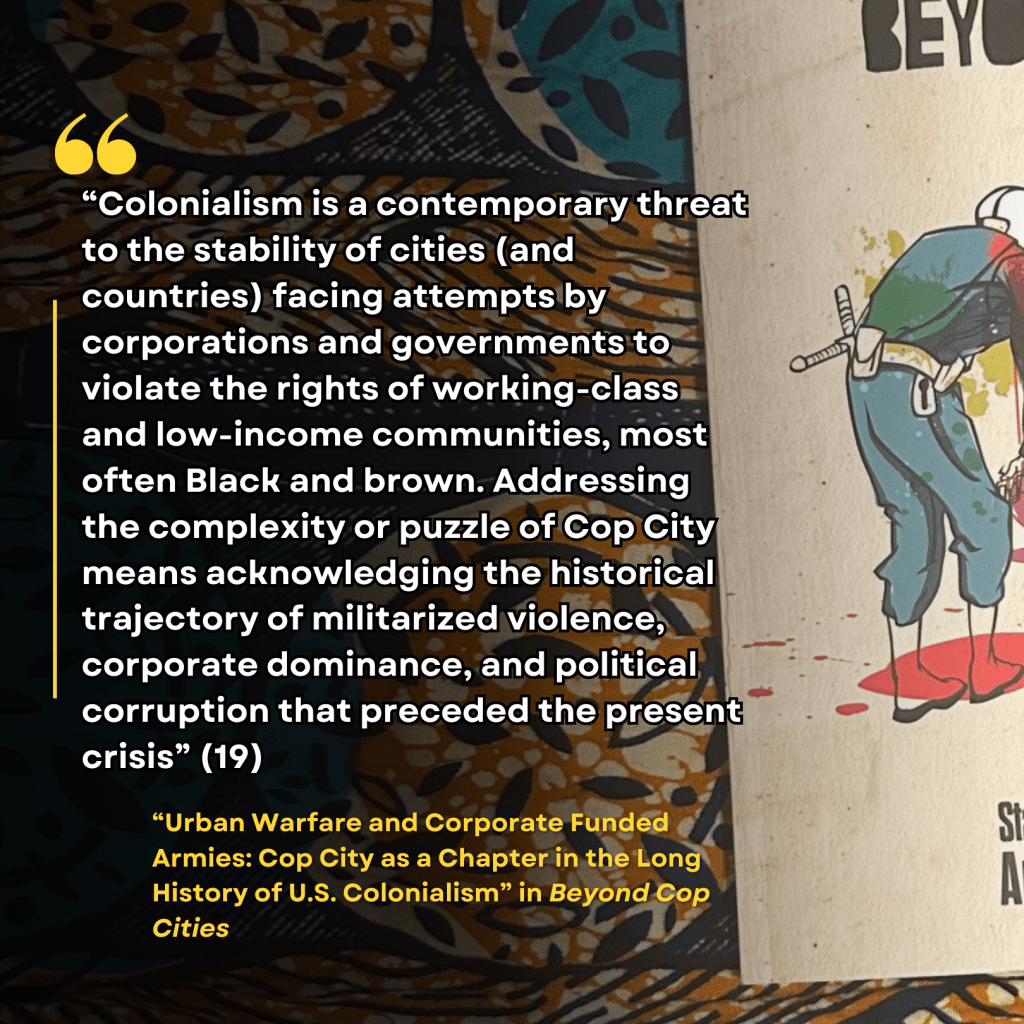
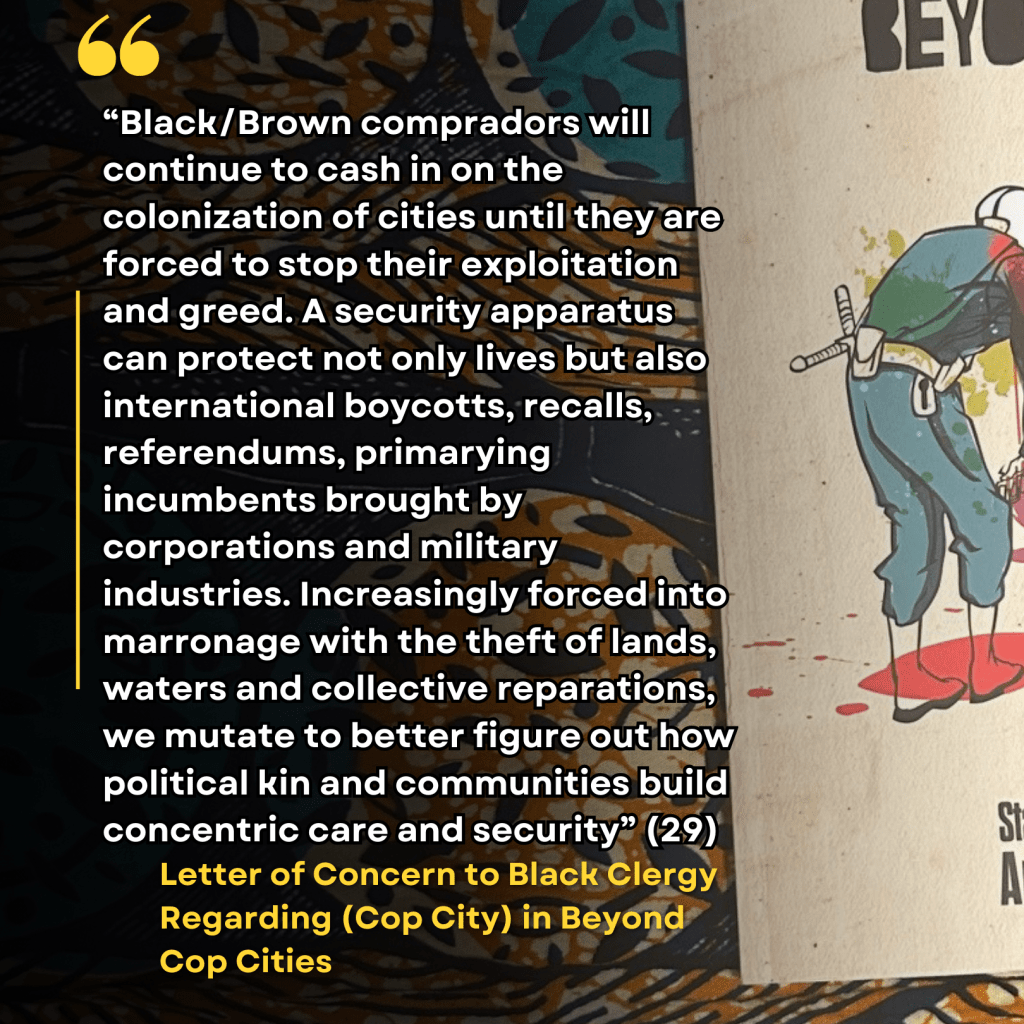
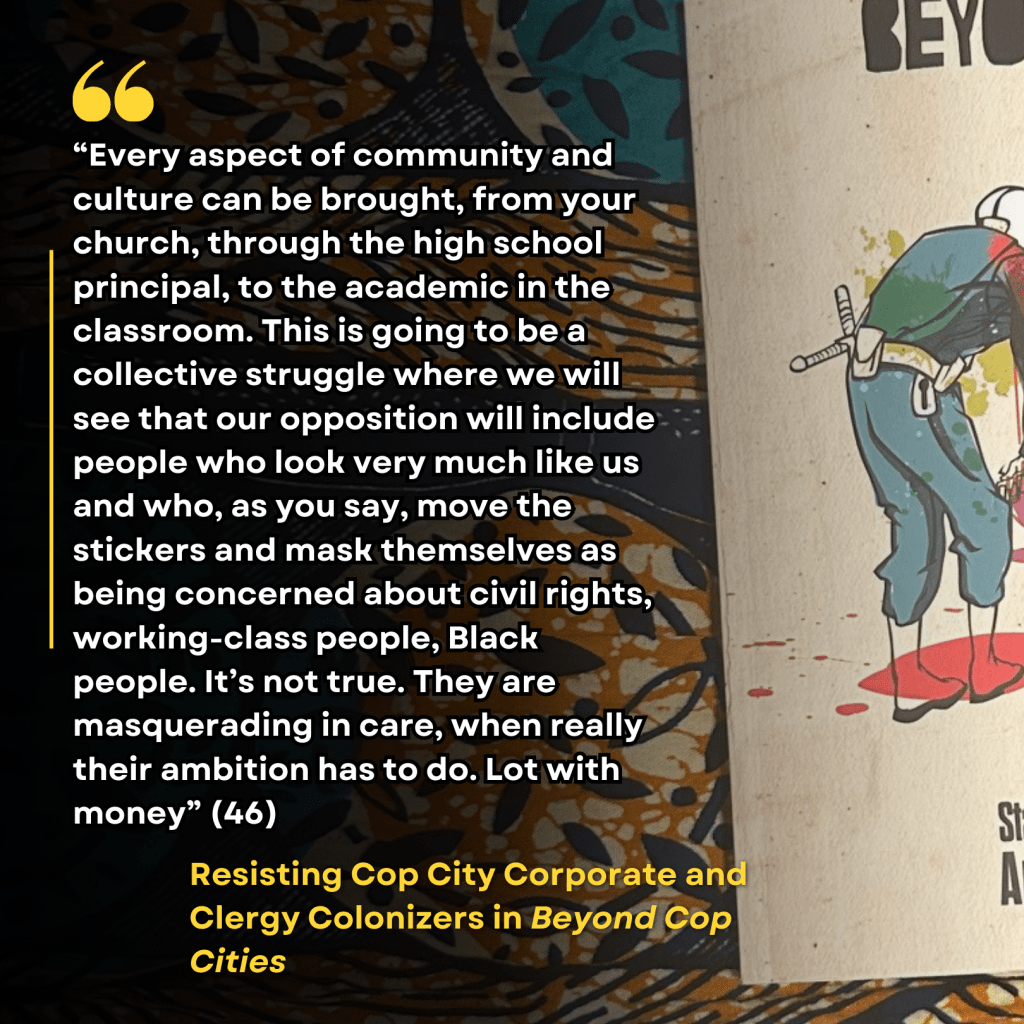
For Black August, I read Beyond Cop Cities: Dismantling State and Corporate-Funded Armies and Prisons ed. Joy James (Pluto Press, 2024). This text compiles a variety of perspectives on the subject of Atlanta’s new police training ground, and it breaks down the different methodologies of oppression community members faced as they attempted to do what democracy promises. They attempted to make their voices heard through protest, a misguided petition, direct conversation with politicians, and a call for a referendum that never occurred. All would suggest that democracy failed, but many of us know that these systems were put in place to fail us when our interests conflict with the interests of the ruling class—those with the money and the power to say “yes” or “no.”
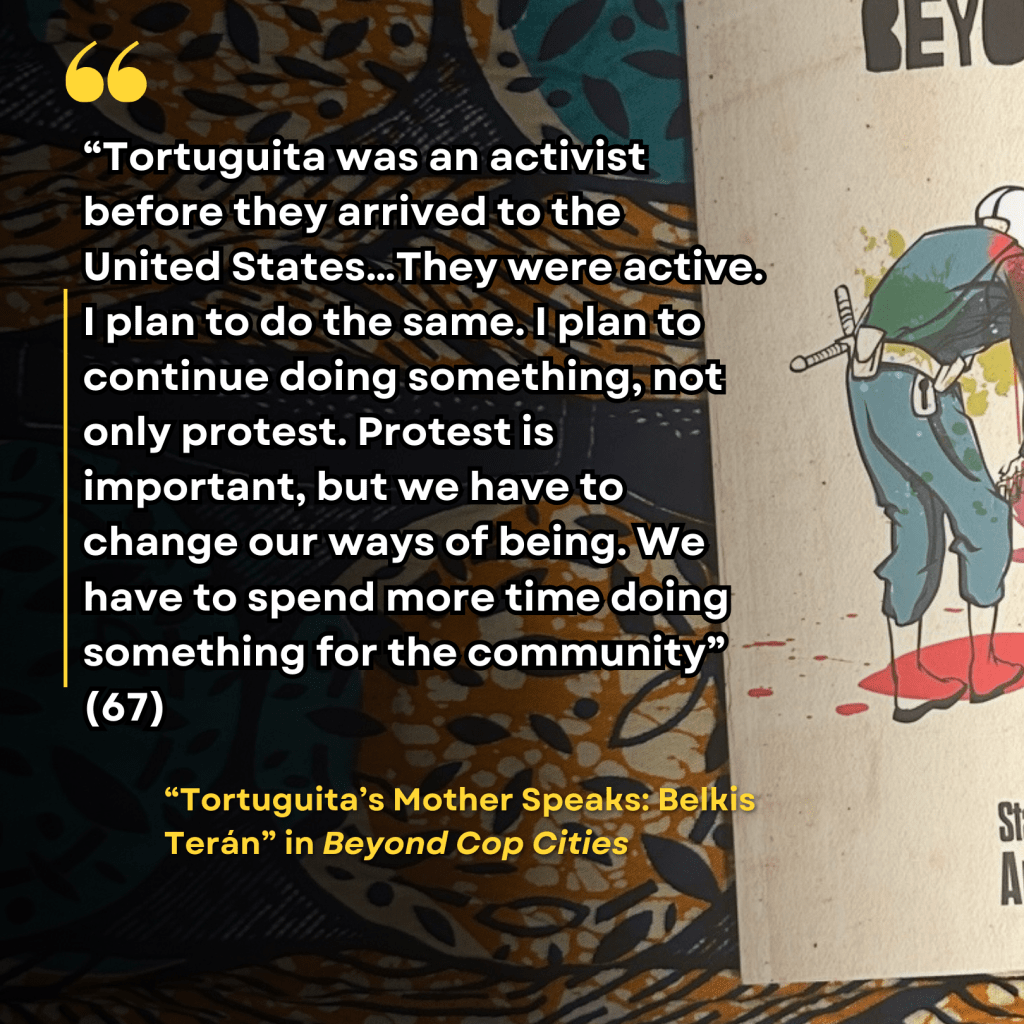
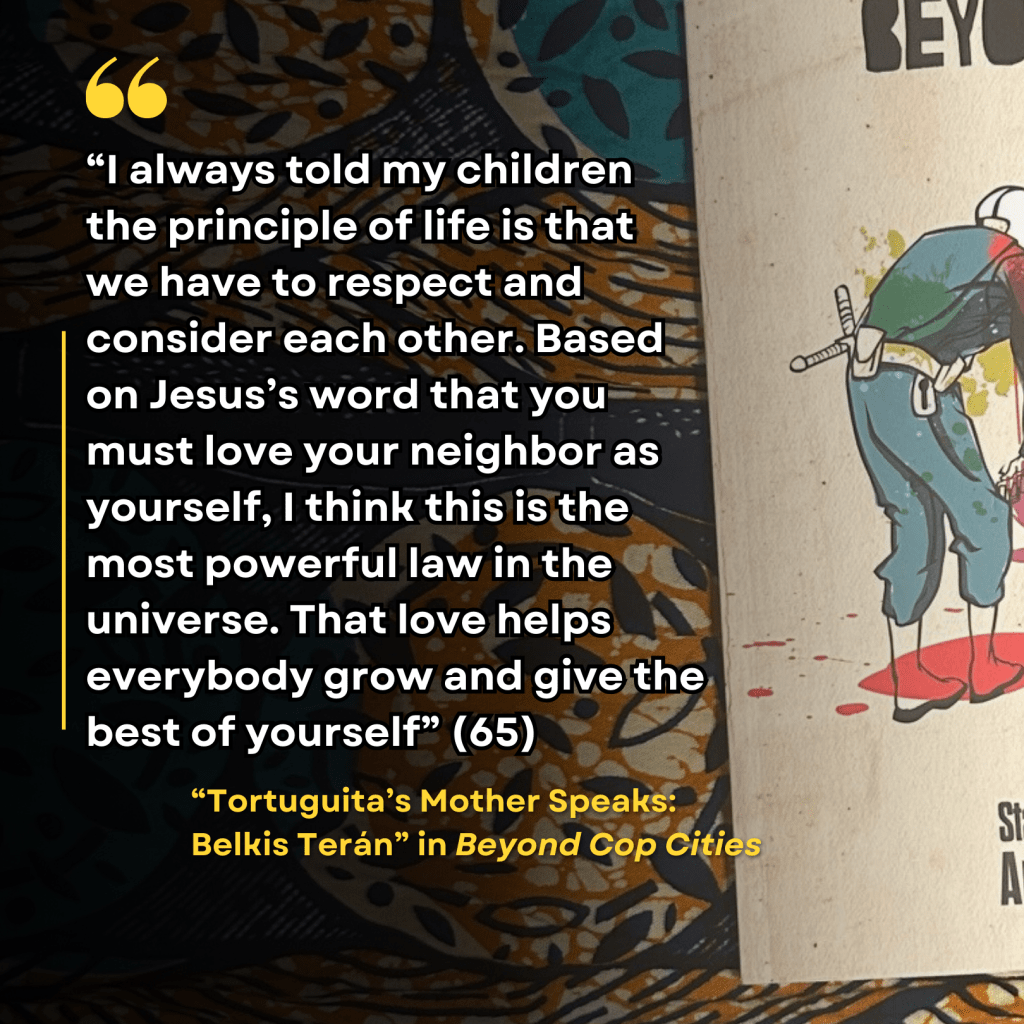
Beyond Cop Cities includes several interviews, including one with Belkis Terán, the mother of Tortuguita, an Atlanta forest defender who was murdered by APD during a protest of Cop City in 2023. This is my favorite part of the book. As I think more about what it means to know and love and fight, what moves me most are the words of those closest to the fire (a positionality that changes depending on the contexts). As Belkis Terán calls for love, she also, she offers a window into what that love looks like. She draws from the Judeo-Christian narrative of Jesus, one who died for culture, belief, and love.
Cop City isn’t a place, or not just a place. It is a manifestation of carcerality, which is rooted in a desire to make inequity rigid—hard to break, hard to escape. Carcerality extends beyond prison walls, and it impacts us all. We feel its limits whether we acknowledge them or not.
Baby, cop city is where we are.
Revolutionary love is rooted in the desire to shatter inequity. I lean into that love. I’m trying to take its lead.



 W R I T E R | T E A C H E R | H O O D F E M I N I S T
Leave a comment